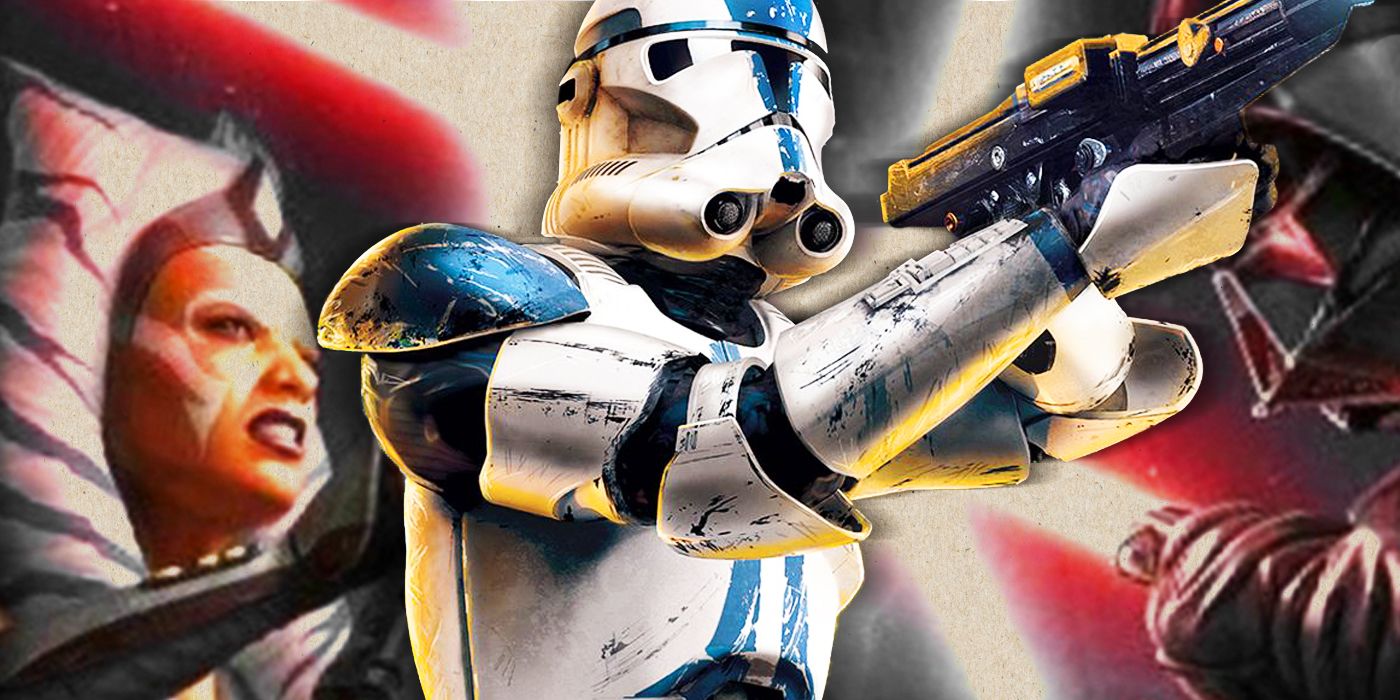
Free Radical Design was one of the most beloved developers of the 2000s. Producing three critically acclaimed titles in the TimeSplitters series and the cult classic Second Sight gave the studio a respected pedigree within the industry and a reputation for creating quality titles. Unfortunately, this pedigree would not be enough to save the studio.
Free Radical went into administration at the end of 2008 due to several factors: the difficulty to pitch a new TimeSplitters entry due to the series’ wide scope, the failure of Haze after the studio’s rocky relationship with Ubisoft, and most damningly, LucasArts’ cancellation of the nearly completed Star Wars Battlefront III.
Click the button below to start this article in quick view.
Free Radical was approached by LucasArts in 2006 and signed on to produce a brand new entry in the fan-favorite Star Wars Battlefront series. LucasArt’s then-president Jim Ward wanted to reboot its IP, and a sequel to Star Wars Battlefront was a part of his strategy. The team at Free Radical was frustrated by the difficulties it was facing developing Haze and so jumped at the chance to work on a franchise as beloved as Star Wars.
Development for the new entry in the series began quickly. Free Radical got along well with Jim Ward, who seemed to share the team’s drive to produce something of quality. The team had a great relationship with LucasArts as a whole, considering it the best experience it had ever had with a publisher. LucasArts had incredibly ambitious ideas for the new game, and Free Radical was only too happy to begin work. The game’s central mechanic was the ability to seamlessly transition between infantry combat on the surface of a planet into the space battles taking place above it. Free Radical had this mechanic functioning well, as shown in some rather impressive leaked footage of the game. Development continued smoothly, so smoothly that LucasArts was already planning a fourth entry, and they wanted Free Radical to handle it as well.
The Nottingham-based developer was given great freedom with the project, devising some different takes on the franchises’ lore with alternate storylines. One such storyline involved an older version of Obi-Wan-Kenobi who had been corrupted by the dark side of the force and another with a Jedi version of the evil Darth Maul. The project seemed like a sure-fire hit and the perfect palette cleanser for the team after Haze. That all changed in early 2008.
Jim Ward left LucasArts in February of 2008, which coincided with Free Radical feeling that the release date for the game was looking too tight, so it contacted LucasArts to keep the company updated with the game’s progress. As LucasArts up until this point had been very easy to work with and equally as passionate about making games, this seemed like a rational move in the interest of making the game the best it could be. Unfortunately, LucasArts was undergoing a massive overhaul; the entire company was restructured, hundreds of staff were fired and multiple projects were canceled.
The new management at LucasArts was concerned with keeping costs down, and Star Wars Battlefront III was not a cheap game to develop. Conversations that had once been jovial and productive between the two companies became cold and difficult. Any of LucasArts’ staff that Free Radical had been working with had either stepped down or been fired, and the new LucasArts seemed to be looking for a way out of the contract. It would not pay Free Radical for its work for six months, and deadlines and milestones were manipulated to ensure that the studio received nothing for its work.
Free Radical was left to “limp along until the money finally ran out” to circumvent LucasArts buying out the contract between them. Ultimately Free Radical no longer had enough money to pursue the breach of contract in court and was forced to accept a small payout of a fraction of what it was owed in a last-ditch attempt to stay afloat. The impossible situation and nightmarish work environment caused Free Radical co-founder David Doak to have a nervous breakdown, necessitating his exit from the company for the good of his health.
At this point, things were dire. Free Radical needed money desperately and began attempting to pitch various projects to publishers. One of these projects was the oft-discussed TimeSplitters 4, but due to the difficulty of easily pitching the game, Haze’s poor reception and the effects of the global financial crisis, no publisher would pick up the title. With not enough money left to operate as normal, the studio entered administration in December 2008.
The death of Free Radical is one of the greatest losses sustained by the gaming industry. The ambitious Star Wars Battlefront III project was briefly handed to Rebellion but ultimately scrapped. A rebooted and markedly less ambitious Star Wars Battlefront from EA would release in 2015 to very mixed reviews and gained a sequel in 2017. Neither of the EA published titles displayed the kind of ambition or scope presented in the Free Radical game, games that are now unfortunately lost to time.
About The Author
