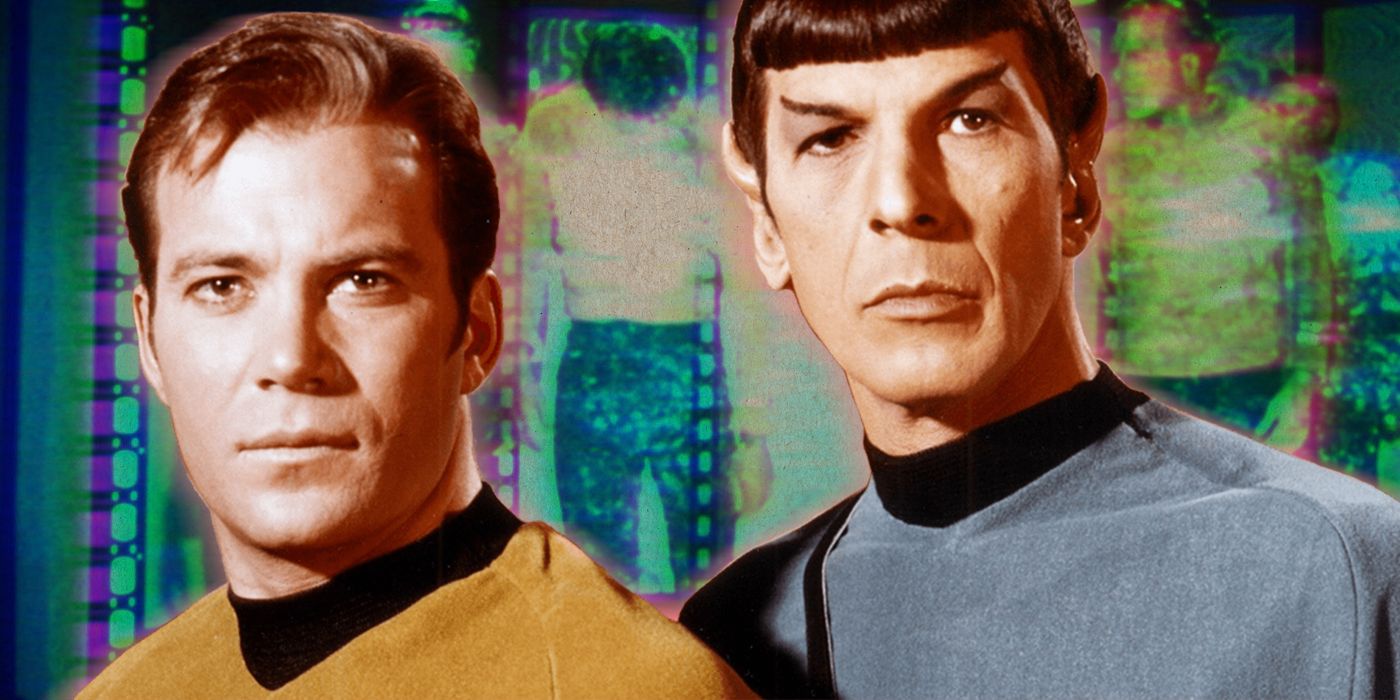
Star Trek‘s original 1960s run set the course for televised science fiction. In addition to its own blockbuster franchise, its inspiration can be felt in everything from The Orville to The Expanse. A few specific episodes are the keystones to its success, and one of them is the Hugo Award-winning first season episode “The City on the Edge of Forever.” But the iconic episode had its own conflicts behind the scenes, and its emotional finale was initially different from what its writer, Harlan Ellison, had in mind.
“The City on the Edge of Forever” endures because of its powerfully emotional story. McCoy, the ship’s doctor, suffers an accidental medication overdose after tending Sulu. In his altered mental state, McCoy flees to a nearby planet, where the Guardian of Time monitors history. Kirk and Spock chase after him, discovering that the eldritch timekeeper allowed McCoy through to the 1930s Earth. While there, McCoy destroyed the future of humanity. Kirk and Spock have to fix their timeline, but Kirk doesn’t realize that he will fall in love with a woman named Edith Keeler, whose death is crucial to preventing the future apocalypse.
Click the button below to start this article in quick view.
The final minutes of the episode are some of the most harrowing in Star Trek history. With the trio of Starfleet officers reunited and McCoy’s sanity restored, Keeler is about to cross the street to meet them. When Kirk and Spock notice an oncoming truck, Spock reminds Kirk of her fate. Kirk, his heart visibly breaking, stops McCoy from rushing out to save Edith. Returning to the future after Edith’s demise, Kirk turns his back on the Guardian of Time and orders his ship to get the hell out of there.
It’s a far cry from Harlan Ellison’s original drafts, which didn’t feature McCoy. Instead, he put the time-travel plot in action by using a crewman named Beckwith. Caught dealing drugs — a wild plot detail that Roddenberry once misrepresented as involving Chief Engineer Scott, infuriating Ellison — Beckwith murders another crewmember and flees to a planet with multiple Guardians overseeing the time gate. Instead of the destruction of humanity, Beckwith’s meddling creates a violent and lawless alternate history. One of the early passes of this section even suggests Beckwith was slated to be executed by an Enterprise firing squad on the dusty planet.
The visit to historical Earth is similar in Ellison’s early drafts, but what was lost, according to Ellison, was the emotional impact of the finale. Instead of Kirk’s painful but deliberate choice to let Edith meet her fate in exchange for the future, Ellison’s draft sees him about to rescue Edith anyway. Spock interferes with cool logic, saving humanity’s fate. Ellison saw his version as a story about a love so powerful that it was worth the apocalypse, which is a common theme of noble but somewhat selfish self-destruction in other Ellison stories. His fury about the change lasted decades, feeling that the televised version lost the extra layer of humanity he’d wanted to illustrate.
The original script’s drug-fueled rampage, Kirk’s out of character selfishness and the budget meant Ellison’s vision of dual cities on the edge of forever, where the gilded towers of time itself and New York mirrored one another, was an impossibility to film in a show that dealt with impossibilities. According to Inside Star Trek by Herbert F. Solow and Robert H. Justman, the draft underwent a number of rewrites, some by Harlan Ellison himself, Gene Coon, Steven Carabatos before the final draft went to D.C. Fontana. Gene Roddenberry personally touched up the final production script.
The result, if not what Harlan Ellison wanted, is still acclaimed as one of the best episodes that Star Trek has to offer. The core of the story is untouchable, a love worth putting the very future of the world in the balance, even if only for a moment. Though the Guardian has crept back into the scene in Star Trek: Discovery, nothing has touched the impact of “The City on the Edge of Forever” since.
About The Author
