WARNING: The following contains major spoilers for Mortal Kombat, currently in theaters and on HBO Max.
With the evolution of streaming services, media consumers are getting spoiled — in a good way — by long-format storytelling. As seen with award-winning shows like Breaking Bad and Game of Thrones, it’s all about proper storytelling and character development, creating emotional connections. Now, there’ll be a bigger magnifying glass on movies that try to cram an epic into a couple of hours on the big screen, which is precisely what happened with the Mortal Kombat reboot. When the martial arts film is dissected, the major arcs indicate it would have been better off as a TV series.
Click the button below to start this article in quick view.
Now, while they weren’t the best executed and lacked Hollywood flair, Mortal Kombat: Conquest and Mortal Kombat: Legacy told more coherent and comprehensive stories. Conquest dove into Kung Lao’s past, while Legacy waded deep into Special Forces, the Lin Kuei, Shang Tsung’s invasion and so much more. The latter had cyborgs, Baraka and various characters from the video games. While it felt like fan service at times, it was all about creating a bigger universe with dedicated episodes detailing the character’s backgrounds and motivations.
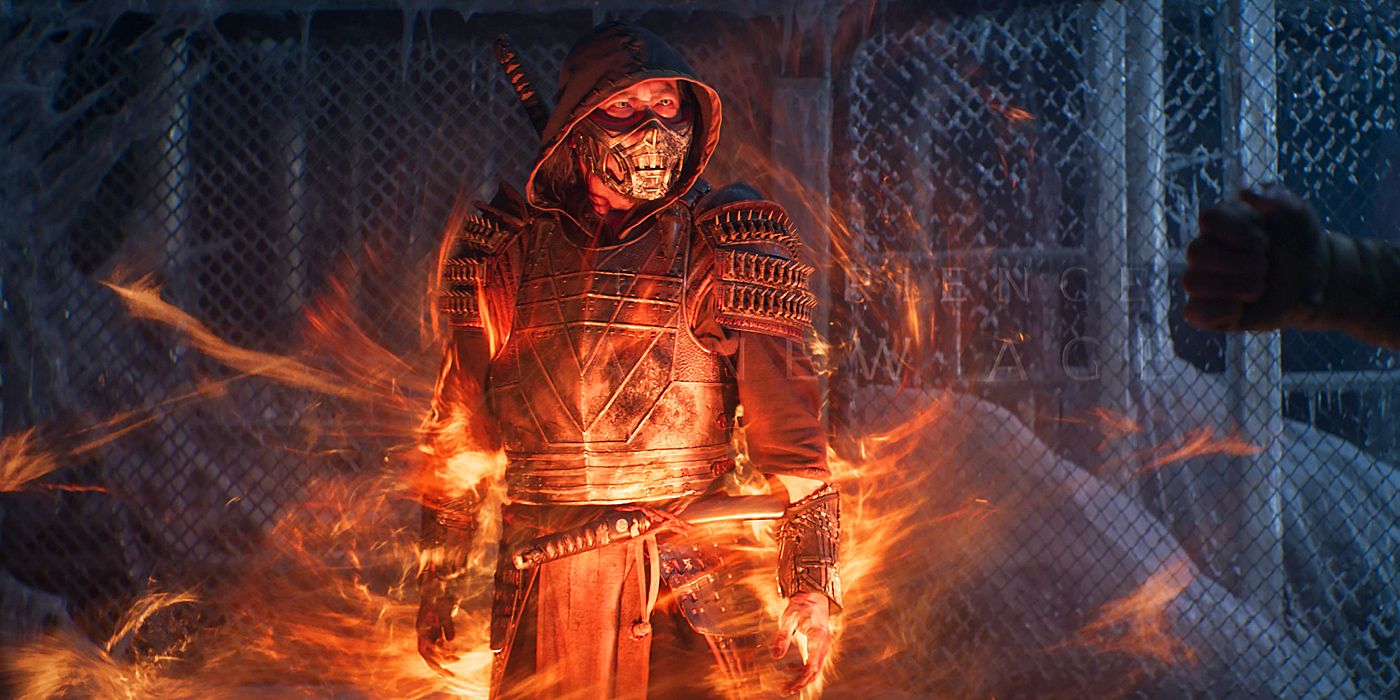
The Mortal Kombat reboot tries to do this, but it suffers. Everything is crammed in, and major plot points are over in seconds, with the film assuming the audience knows how deep rivalries run. It’s not smart because not everyone knows the video game. Mortal Kombat could learn a thing or two from the Marvel Cinematic Universe, which does well catering for a non-comic crowd by building a proper foundation. Off the cuff, the reboot fails with that. Viewers never find out why Joe Taslim’s Bi-Han and the Lin Kuei hate Hanzo Hasashi’s Shirai Ryu. There’s no precedent for the initial assault or explanation of why they’re mortal enemies and why Bi-Han eventually relinquishes his old identity and insists to Shang Tsung he is called Sub-Zero.
A Mortal Kombat TV series could have dissected all this, reaffirming the importance of the Grandmaster and why Bi-Han wants to don his mask. Audiences never even find out what happened to the rest of the Lin Kuei, or what Hanzo goes through in his transformation in hell (aka the Netherrealm), so it’s just random storytelling. In addition, apart from seeing a painting of Shao Kahn, there’s no explanation of his link to Shang Tsung or why the Elder Gods, as Raiden confirmed, are too busy to pay attention to the shape-shifting sorcerer breaking the tournament rules and invading before time.
Episodes could have broken important lore down, such as Shinnok, scorn Earthrealm, especially as Shinnok’s amulet is in Raiden’s temple. The problem is, when Kano tries to steal it, no one knows its value. It’s an odd Easter egg, but again, it ties a lot into Raiden’s problems with his superiors.
Even with Liu Kang and Kung Lao, they’re brothers from the Shaolin order, but they never really come off as anything more than training partners. It’s why when Kung Lao dies and Liu Kang mourns, it falls flat. Had we seen Liu Kang picked up off the street by Bo’ Rai Cho, training with the Lotus Order and learning about the initial Kung Lao, a former champion, we’d get more depth as to why they’re blindly following Raiden. It’s a similar problem to Shang Tsung’s crew, as we don’t know why they’re following him, especially Mileena. Her feud with Kitana’s never mentioned, nor is Goro’s role as a Shokan prince. Even Nitara, the winged-beast, randomly appears as the sorcerer’s prized “beauty” and fighter — which is why when they all die, it’s emotionally lacking.
Lastly, Special Forces suffer because Sonya’s journey with Jax, investigating the dragon marks fighters are born with, deserves more of the spotlight. Seeing her talking about past tournaments and clans, with Kotal Kahn and Nightwolf getting teased in pictures, demands a larger exploration. Seeing them hunting the Black Dragon, Kano and Kabal would have added a lot to the film because as it stands, they all run into each other by luck, conveniently having info for the other party. This repeats mistakes of old from the previous two Mortal Kombat movies, and the reboot simply tries to cover it with bandages of superficial fights. Sadly, this direction ignores so much of the deep history that’s important to the tournament. By quickly glossing over this in Mortal Kombat‘s two-hour runtime, the remake sacrifices a lot of substance.
Directed by Simon McQuoid and produced by James Wan, Mortal Kombat stars Tan along with Jessica McNamee, Josh Lawson, Tadanobu Asano, Mehcad Brooks, Ludi Lin, Chin Han, Joe Taslim, Hiroyuki Sanada, Max Huang, Sisi Stringer, Matilda Kimber and Laura Brent. The film is in theaters and on HBO Max.
About The Author
