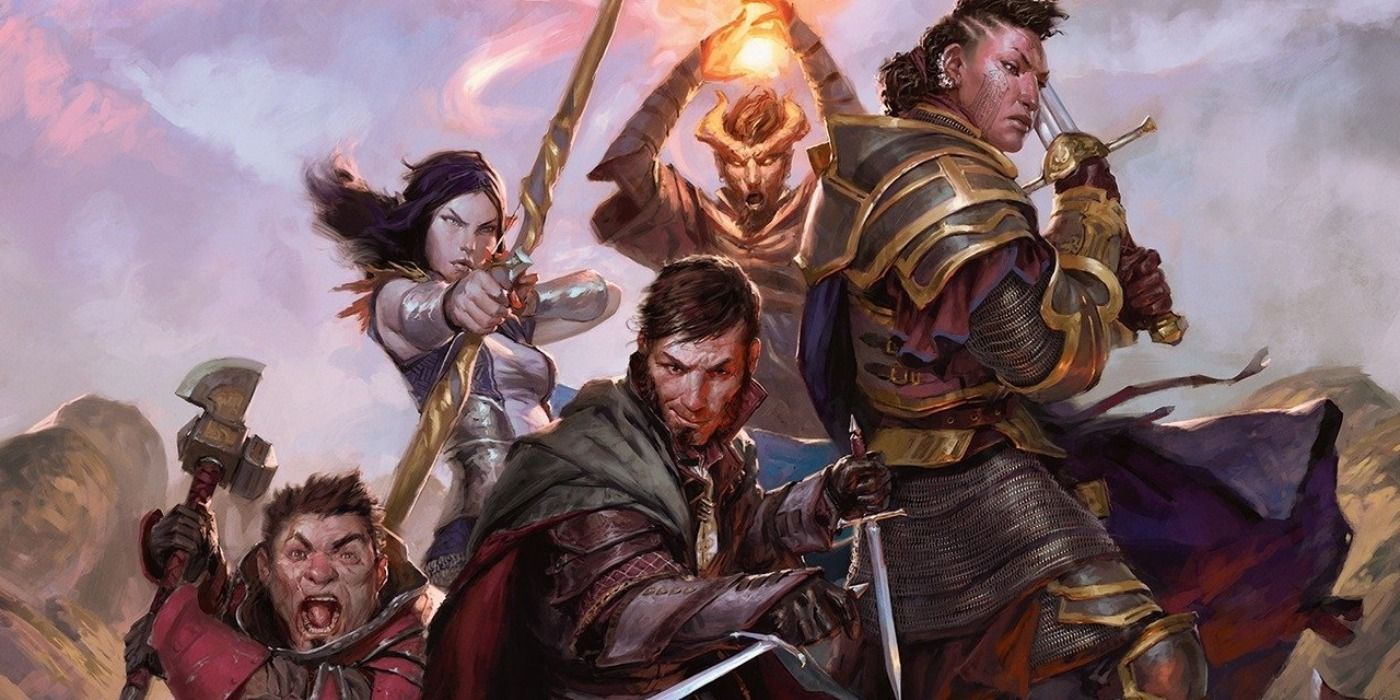
Being a newcomer to an RPG can sometimes be overwhelming. There’s stats, spells, armor, and there’s an entire world being built in a campaign that requires a character. Building a character can take time and energy that some players who are just starting out may feel lost on.
Building a character requires a player to choose their class. While some classes are more challenging for players, there are those that are better suited for players of any skill set, including beginners. These are some classes that beginner players should consider when creating a character for D&D.
10 Clerics Can Do Anything
One of the more well-known and classic of the D & D classes, the magic-focused Cleric uses Divine Magic in service of a deity. This is a decision players will have to make when creating their character and that choice will usually serve their character’s reasoning for adventuring and joining the party.
All Clerics get a choice of which Domain they wish to serve so long as that Domain relates to the deity of their choice. These domains opens up spells and different paths for leveling up along the adventure, the blessings a Cleric can bring to the party can be used to heal or to fight enemies depending on the path players choose. Clerics are truly customizable characters which makes them perfect for beginners.
9 Bards Are Good For Talkative Players
What’s a D & D party without a Bard? For the more charismatic and talkative players, there’s the Bard class. Though often regarded as the musical class, these versatile characters are best used for deception and charisma checks – especially if they’re trying to talk your party out of a problem.
Bards can add healing magic and a dose of Bardic Inspiration to boost others in a fight. Adding in Bardic Colleges down the line only increases the added support along with their own spellcasting abilities that will aid in any party.
8 Wizards Offer An Entry-Level Way To Learn Magic
Also one of the more well-known and classic choices for creating a character in D & D, the Wizard studies magic and has more focus on Wisdom and Intelligence. Unlike other classes, the Wizard studies magic and learns by being a scholar and later on joining a school to enhance their magical abilities.
Wizards are magic focused and carry a spellbook that they add to as they level up and master. Choosing a school can vary depending on the player, there are options for Transmutation, Illusion, even Necromancy which all have their own fun additions to a character and campaign.
7 Paladins Help Players Develop Their Fighting Skills
Another classic, one that is often found in most parties, the Paladin is a warrior who has taken up a cause and follows a holy quest. Eventually these characters take an Oath to commit to a path they have been following, an Oath they can even break depending on the path of the campaign and their moral alignment.
Paladins, much like the Cleric, can serve a deity, however, focusing on Strength allows Paladins to be great fighters in combat. When they gain spellcasting abilities at level 2, much like a Cleric, Paladin’s draw on their own divine magic whose focus changes with the Oath they take. While Clerics and Paladins may share similarities, Paladins are more versatile when it comes to hand-to-hand combat and are often portrayed as knights, while Clerics are more priest-like.
6 Warlocks Are A Fun Way To Explore A Dark Character
Unlike a Wizard, a Warlock is a character who has made a pact with a being for their magic. Serving this patron can be similar to a Cleric serving a deity, but there can be a darker element to Warlocks as they can serve darker entities such as demons.
There are things the patron may ask a Warlock character to do in service of them that can benefit or endanger a party, depending on the player’s choice and the DM – who will ultimately decide how little or major a pact will play on the campaign itself. Warlocks have a fighting ability and can be solid combat fighters, but it all comes down to the service of their patron and whether players choose to focus on their magical abilities more than the Strength stat.
5 Rangers Are Versatile Classes
If players are torn between a Fighter and Druid, a Ranger may be a solid compromise. This class has magic from level 2 onwards and does not rely on choosing a circle to fulfill it, but, much like the Fighter class, players will have to choose an Archetype such as Beast Master, Hunter, or even Monster Slayer.
Rangers are great explorers and can live in nature. When traveling over terrain or even in dungeons, Rangers may have a better ability than other classes to do so. A Ranger is a versatile class for new players who want to experience both the magic side and fighting side of the world of D & D.
4 Rogues Will Help Players Learn Positioning
For the more stealth focused and deceptive players, there’s the Rogue class. These characters can range from thieves to assassins and can learn magic with the Arcane Trickster archetype. Rogues are meant to be sneaky and for players who may want to blur the lines of their alignment this class lends itself well.
At the third level, choosing an Archetype allows a Rogue to grow their skills, whether it be a thief or assassin. Building a Rogue requires a focus on dexterity and charisma if players want to focus on deceiving others when interacting with NPC’s or opponents. Rogues also benefit from flanking their enemies which can help players learn proper positioning.
3 Druids Allow Players To Experiment With Nature Magic
A class that is more focused on nature and can even talk with animals, the Druid is fun for new players who want to play around with nature magic and who can even transform into a beast of their choosing with Wild Shape. Choosing a Druid Circle allows for more options and a focus on a specific kind of nature magic, such as Land or Water.
If players are interested in a character and creating one with a background of living out in the wilds, connecting with nature and the animals that inhabit the world of their campaign, a Druid is a great class for beginners to try out.
2 Fighters Are The Straightforward Fighting Class
A more combat-focused class with the potential for a varied background, the Fighter is great for beginners who don’t want to focus as much on magic but rather the weapons and fighting abilities of their character. This class allows for a focus on ranged or melee weapons making it a great choice for players who want to build an archer or a sword fighter.
Down the line players get to choose an Archetype that can play more into the background of their character, but for players who may want to use magic there’s the Eldritch Knight archetype.
1 Barbarians Are Good For Players Who Want To Take Charge In Battle
For players who want to take charge in a battle and who want to focus on strength, Barbarians are a solid choice. They are headstrong characters who tend to want to seek out adventure, making their backgrounds easily adaptable for any campaign.
Focusing on their Strength and Constitution is best, especially for combat focused players, and choosing a Primal Path later on allows some variety in the battle rages. If players really want to live out a Viking fantasy, there’s the Berserker option for Barbarians.