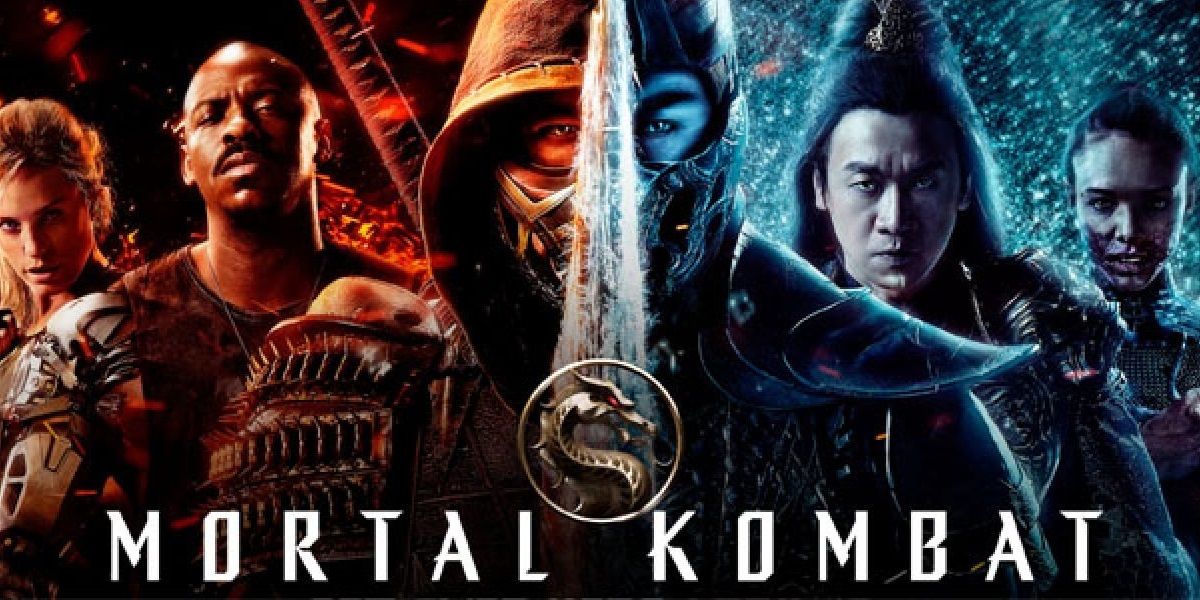
For nearly 25 years, the Mortal Kombat franchise has been absent from the big screen after going out on a lukewarm note with 1997’s Mortal Kombat: Annihilation. The fighting game franchise is poised to make its epic return to cinematic form with a new theatrical reboot written by Greg Russo, a fan of the franchise. In crafting the film’s story, Russo sought to include and refine things previous video game adaptations and deliver an inviting story celebrating the franchise while welcoming longtime fans and new audiences alike.
In an exclusive interview with CBR, Russo shares his lifelong love of the fighting game series, what characters he couldn’t quite include in the finished film due to time and story constraints and the possibility for sequels and spinoffs as the film developed.
You’re a gamer and been playing Mortal Kombat for decades now. How was it to get this gig and bring Mortal Kombat to the big screen for the first time in nearly 25 years?
Greg Russo: It was simultaneously a dream and very stressful. [Laughs] The stressful grew over the years, but as a gamer and someone that grew up in the arcades, putting the quarter on the machine and standing there King of the Hill-style and killing noobs with Kitana all day, it was one of those dream jobs. It was something I had to work for, obviously, I had to build up my resume and trust in Hollywood a bit. It was something I always wanted to do so I got very lucky when it came up at New Line that I was already over there working on something. I raised my hand and said, “I love this and am genuinely passionate about Mortal Kombat, I can help with this.” And so they gave me a shot and I worked on it for five years and basically worked on it into production.
Since the franchise started, there’s been an increased emphasis on mythology and extensive backstories. While I’m sure you couldn’t fit in Rambo, how was it narrowing down the cast to this set of characters?
Russo: It was challenging, it was hard, as a fan of all those characters. For example, I wanted to include the character Kitana but she was someone I had to wait on; it just goes to show you, I couldn’t get my own personal favorite character in and how difficult it was to narrow down those choices. The mythology in Mortal Kombat is very dense, they’ve rebooted it, changed timelines and retconned stuff. When you’re adapting it into a film, your goal is to extract what you can and spin it as simple as possible because you have to remember most of your audience is for a movie, not the video game, so most of your audience might not know what Mortal Kombat is. So they’re walking in the door expecting you to tell them what this whole, giant, dense mythological world is.
You have to get that information out, try to do it organically and make sure the story is simple enough for people to understand, that’s the difference between writing a movie versus writing a game where you’re telling three hours of dense fan service. It was about extracting the pieces of the games’ mythology that I felt were linear enough and close enough to the games that I felt I wasn’t blazing too much but also telling a story anybody could walk in and understand. For picking the character roster for the film, it came down to really what worked best for the story; it was always about the story. There was a specific point of view we wanted to tell with the story so we had to find the characters that made the most sense towards that point of view.
Is that what informed the creation of Cole?
Russo: The idea of a new protagonist was something that predated my involvement. When I came in, they wanted a way into the movie for a new audience, and I understand that and get that 100%. When we’re bringing in a new protagonist, there’s a couple of great benefits to it. One, it allows us to funnel a lot of that mythology through that character, it’s a natural part of the storytelling process because we have to get that information out. It was tricky to get the information out through the established Mortal Kombat characters because they have their preset dispositions and beliefs and backstories.
We felt like that [a new character] was a great engine to deliver that information but also for creative purposes. We wanted to be able to bring in a new point-of-view, brand-new character and new side to the story. We didn’t just want to retell the same story that people have seen a hundred times about two characters getting on a boat and going to an island. As writer, my job is to make sure that [the new character] fits organically into the mythology, he’s not just tossed in there to be that fish-out-of-water guy, he plays an important part in the story and that was part of the process.
In terms of the established characters, in this world of ninjas and robots and monsters, you’ve got the Shaolin monks and ninjas, like Hanzo, playing a major role. What is the importance of these characters and what do they mean to you?
Russo: I think the Shaolin monks and the Lin Kuei, they’re so iconic a such a lifeblood for what Mortal Kombat is and I think the special forces are extremely important too. I knew, personally, if you look back at the ’90s films — I love the ’95 one — the one thing the fans never got was that great Sub-Zero/Scorpion payoff. It’s a great movie, but they show up and don’t say anything and Scorpion shoots a snake out of his hands. One of the things I really wanted to make sure this movie had is I wanted to make sure it had the Scorpion/Sub-Zero setup. It’s a great backstory and the most emotional piece of mythology in all of Mortal Kombat is that Scorpion/Sub-Zero origin, how they came to be.
As a writer, I’m always looking for emotions, especially in a big and flashy Mortal Kombat movie; where can I find the emotion? That was one of those moments, I think it’s a beautiful moment. And then it was making sure we could get a payoff: A big Scorpion/Sub-Zero fight is something that fans, including me, personally, have been clamoring for and never got and everybody wanted to see it so I was like “Let’s do it and do it as amazing as we can.” Same thing with Kung Lao, he never got much screen time and he was one of my favorites. It was about digging in and pulling out stuff that people love and trying to deliver it.
A sequel to Mortal Kombat: Annihilation has been in the works for years. What do you think it is about the development on those films and Annihilation itself that they couldn’t quite get right?
Russo: It’s a challenging thing. You’re dealing with a very crazy, expansive world that has everything like you said: Everything from robots and four-armed monsters running around to soul-sucking sorcerers. There’s a lot to get to and do and I think tone is the trickiest thing with Mortal Kombat. You’re always walking that line where if you tiptoe over the edge, you’re in camp, you’re in that cheesy world that no one wants to do. As much as everyone loves Mortal Kombat, there’s kind of this wink-wink nature to it because it doesn’t take itself too seriously, that’s part of its charm and it’s also never campy or too ridiculous.
I think part of the challenge adapting Mortal Kombat is just striking that right tone and part of what we wanted to do with the adaptation is respect the authentic nature of Mortal Kombat because they do take their storylines seriously and they do take their characters seriously and they do a great job of it. And we wanted to make sure that we did the same thing, that we respected it and gave it an authenticity and realism as much as we could.
I was talking to producer Todd Garner, and he was saying he could love to come back for potential sequels and you certainly leave yourself room to explore. Do you have stories that you’d love to come to set in this world?
Russo: When I wrote it, I conceived it as a trilogy; I didn’t even tell the people I was working with I was doing it as a trilogy. Just as a writer, you never want to paint yourself into a corner or shutdown where your storyline could go. When I was writing the first film, I was always, in the back of my mind, outlining two more so I always knew where things could go. I would love to come back and explore, there’s just so much of the mythology that we didn’t have the time to get into [but] two hours is the right length for a first film. But there’s more, there’s the Shaolin monks, there’s the special forces, there’s all these spinoffs that you could see.
But in terms of the films, I wanted to make sure there were places we could go and certain realms, we barely touched them. For example, Edenia is a realm that I love and I love all the characters there — Kitana, Sindel, all these great characters — and as much I wanted to put them in the movie, the story said to wait a minute because that deserves its own time to shine so don’t jam these characters in there when it’s not right. And when it came to character selection, it’s all about doing the characters a service. But I would love to write more and love to explore more.
With this being such an enduring, expansive franchise, what was something you wanted to leave with your own voice on Mortal Kombat?
Russo: My main goal is I wanted to show the love that I feel for the property, I genuinely love Mortal Kombat and grew up with it. I was playing it at arcades and playing it at home when I got back from the arcades; it was just something I was passionate about. If you’re a fan, I want you to see the movie and [see] it was actually written by a fan. I grew up with video game adaptations where you could tell this was written by the next writer the studio picked who probably looked up the game on Wikipedia before they wrote the script and it shows. I wanted the fans to go “Wow, this is written by people who genuinely love the material and give a shit about what they’re doing.” That’s my hope.
How is juggling all those voices in an ensemble cast?
Russo: Oh, it’s really challenging because the challenge with something like this is you have something like the Avengers right off the bat or the Justice League. I think the Suicide Squad is a good example of a movie where they’re thrown right into the big ensemble mode from the get-go and you do your best with everyone in the moment. You try to pick out and give them heroic moments to shine and kick-ass or villainous moments to do terrible things. You try to give as much time and love as you can, but knowing that you have a certain amount of time to get all that out. It’s challenging and maybe some other cuts will be released where you’ll see some of the scenes where we got even more into the character stuff but I’m happy with how it all came out.
While you’re a fan of this, was there a character you gained a healthier appreciation of on the other side of writing this?
Russo: That’s probably Kano. Kano was a character that we all creatively loved the idea of throwing this rogue mercenary jackass right in with the heroes, and I loved that approach from a story perspective. It’s one thing when you have all the heroes together and they all have one perspective and point-of-view on a situation, but when you throw in a guy that’s just a self-serving, egotistical prick, it throws the whole thing out of balance in a great way. He’s constantly that thorn in their side and slowing them down and Kano just kind of evolved wonderfully into this guy that you love to hate. When I saw that developing in the script, it was just so great. And then Josh [Lawson] came in and just elevated Kano to another level, in a weird way, Kano stole the show in that first half. That was a character that we thought would be a lot of fun but he just took it to another level.
After having worked on it for the past five years, what are you happy about being able to now see the final product and bring Mortal Kombat back?
Russo: I’m just super grateful to New Line for giving me a crack at it. I think everyone involved with this movie put their heart and love into it, across the board; I was just one cog in the machine. I would go on set and talk to people in props or wardrobe and all of the many powers that Simon [McQuoid] would talk together with on Zoom sixteen hours apart, we tried to put in as much love as we could. I’m proud that I got in there and the studio let us do it, they let us be creative and put that love in and I’m hoping people see it.
Directed by Simon McQuoid and produced by James Wan, Mortal Kombat stars Lewis Tan as Cole Young, Jessica McNamee as Sonya Blade, Josh Lawson as Kano, Tadanobu Asano as Lord Raiden, Mehcad Brooks as Jackson “Jax” Bridges, Ludi Lin as Liu Kang, Chin Han as Shang Tsung, Joe Taslim as Bi-Han and Sub-Zero, Hiroyuki Sanada as Hanzo Hasashi and Scorpion, Max Huang as Kung Lao, Sisi Stringer as Mileena, Matilda Kimber as Emily Young and Laura Brent as Allison Young. The film arrives in theaters and on HBO Max April 23.
About The Author
