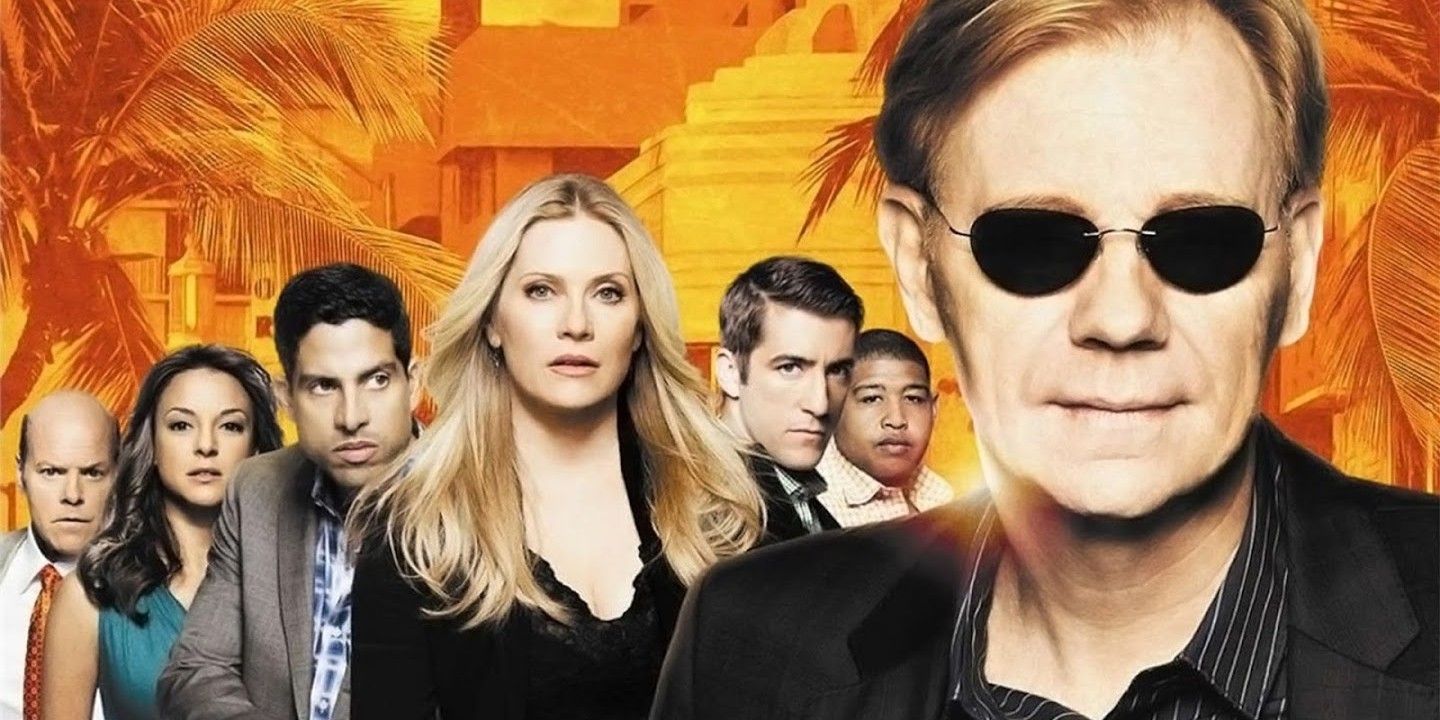
The CBS series Crime Scene Investigation (CSI) was a hit. It was not only wildly popular, but it was also a cultural phenomenon. Airing from 2000 to 2015 and totaling fifteen seasons, CSI redefined the television crime procedural for the 21st century. With that in mind, it’s no surprise that its first spinoff, CSI: Miami was also quite successful. Although CSI: Miami ran for a solid ten seasons, it was canceled before it saw an eleventh.
What Was CSI: Miami?
CSI: Miami followed a group of detectives and forensic scientists working with the Miami-Dade Police Department. The highly skilled team was led by Lieutenant Horatio Caine, a forensic analyst and former bomb-squad officer, and Detective Calleigh Duquesne, a ballistics specialist. Together, they headed the group of forensic investigators, consisting of Lieutenant Megan Donner, Detective Eric Delko, LAPD transfer Jesse Cardoza, Detective Ryan Wolfe and former FBI agent Natalia Boa Vista. The team was aided by others, such as Horatio’s sister-in-law, Detective Yelina Salas, Medical Examiner Alexx Woods and Miami Dade Police Sergeant Frank Tripp. After ten seasons of forensic investigations involving heinous crimes, wrapped with its final episode, “Habeas Corpse.”
Click the button below to start this article in quick view.
Why CBS Ended CSI: Miami
CSI: Miami was incredibly favored during its run. In fact, at one point, it was named the World’s Most Popular TV Show in a study of ratings across 20 countries. It received and was nominated for a plethora of awards throughout the years. But ultimately, CBS canceled CSI: Miami due to a decline in ratings and the climbing cost of production.
During the show’s last season on the air, CSI: Miami ranked Number 27 out of all broadcast TV shows. That was a stark contrast to its usual spot in the top 10, where it reigned for its first four years. But as seasons went on, the ratings began to slip, indicating the crime drama was on its way out.
On top of that, the rising cost of production didn’t help. Long-running shows tend to be more expensive to produce as opposed to shorter ones. This is because the longer the series goes, the more contracts have to be signed, renegotiations must be had and unions require various pay raises. With long-running shows that continue to bring in high ratings and revenue, it’s often worth continuing to produce episodes. But in CSI: Miami‘s case, the mix of poor ratings with large expenses wasn’t doable. Thus, CBS canceled the show after Season 10.
About The Author