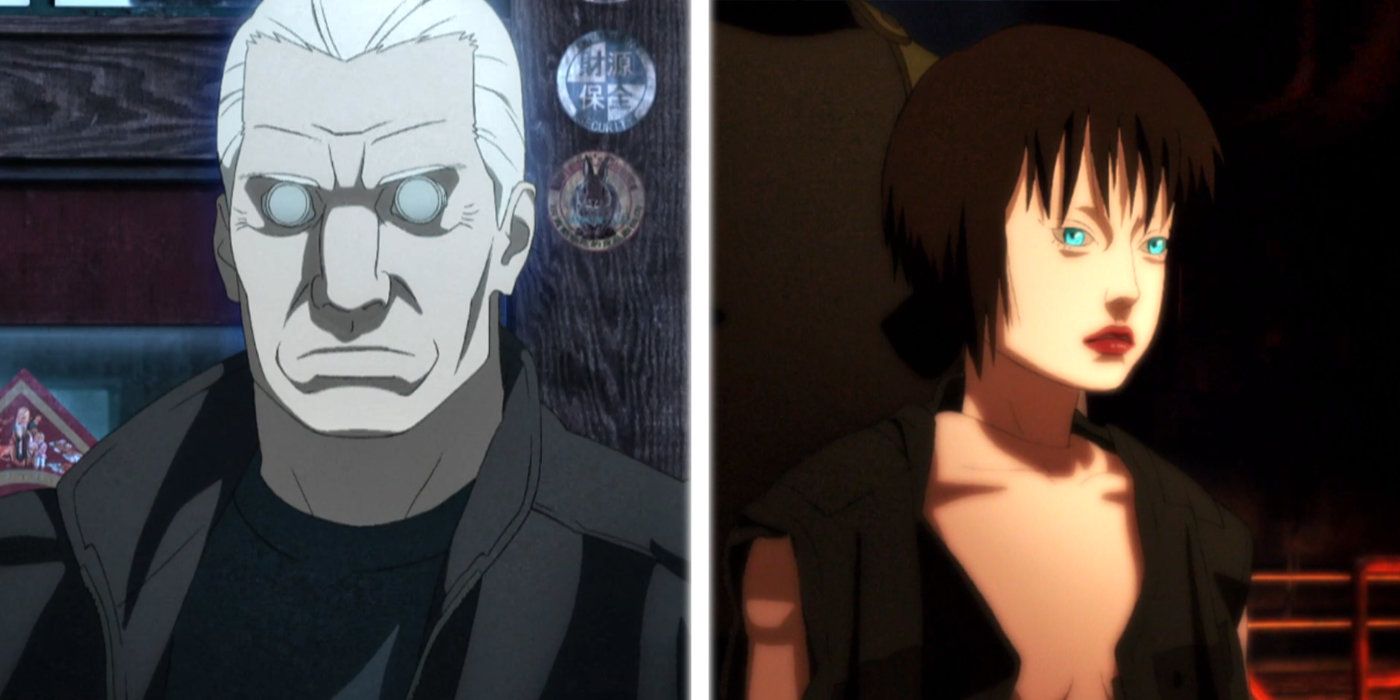
In 1995, Masamune Shirow’s groundbreaking manga Ghost In The Shell was adapted into a feature-length animated film. It went on to become one of the most iconic Japanese anime films of all time, responsible for influencing everyone from the Wachowskis, to James Cameron. The mixture of cyberpunk, philosophy, and amazing action scenes was the perfect mix for audiences hungry for something deeper and more immersive.
In 2004, a sequel finally came out, subtitled Innocence. This was a much different film in comparison to the original, and audiences who expected more of the same were in for a big surprise. Both films stand on their own as masterpieces, for many different reasons but Ghost In The Shell 2: Innocence does differ from its predecessor.
10 It Is A Detective Noir Story Instead Of An Action Thriller
The single biggest difference between the first Ghost In The Shell and its sequel is the tone. The first film focused heavily on cyberpunk elements mixed with some sprinklings of philosophy in between spectacular action sequences. This helped make it an iconic entry in the anime genre.
The sequel is far different and feels much more like a detective noir story. It’s a movie with investigators chasing a case, with all the nods to traditional police thrillers of old. The mixture of classic elements, such as 1950s automobiles is a big help in selling that dynamic.
9 The Sequel Has Much More Visual Symbolism Than The Original
The first Ghost In The Shell had quite a lot of visual symbolism mixed into the story, and even on repeated viewings, there’s always something new to spot. Attention to detail is one of the greatest strengths of the film, and Innocence plays on that by ratcheting everything up several notches.
From start to finish, there’s an overwhelming amount of detail and symbolism in every shot, and director Mamoru Oshii took every opportunity to make a statement, no matter how subtle it may seem to the audience. This creates an entirely deeper dynamic than the first film.
8 Batou Is The Main Character (Instead Of Motoko Kusanagi)
The decision to sideline Major Motoko Kusanagi for this film was a controversial one but it was done on purpose. The objective was to put the audience in the shoes of a character who was searching for her instead. Naturally, Batou was the best choice, given his complex and caring relationship with the Major.
Batou is up to the task, even if he’s not as exciting to watch on screen as Kusanagi. He’s also a much different character than the one from the first film, showing greater melancholy and introvertive traits. His mind is clearly obsessed with the Major’s fate, and that plays out through the whole film.
7 The Sequel Explored A Greater Philosophical Conversation
Ghost In The Shell was big on philosophical talk, and it was a jarring experience for Western audiences who weren’t quite used to the kind of depth normally reserved for cult classics like Blade Runner. The second film amps up the philosophy tenfold, which can be even more difficult to follow.
Nevertheless, audiences need to try. It’s easy to chalk frustration up to a short attention span, but the movie does have a powerful message to say about the value of life, no matter what form it takes. Each act of the film focuses on a different philosophy that eventually moves the story towards this fact. Plus, it encourages the viewer to go read up on philosophy, which is never a bad idea.
6 Section 9 Plays A Bigger Role
In the first film, there was a cold war brewing between Sections 6 and 9, both part of the government, and responsible for maintaining national security. As such, less focus was placed on Section 9’s team members, which is a bit of a switch-up from the manga and TV shows.
Here, Section 9 plays like an extended detective squad, and that’s a good thing. Aramaki makes a return, as does Ishikawa and Togusa. This time, Section 9 feels as if it’s at the forefront of the story, instead of sharing it with a rival Section actively engaged in a cover-up.
5 Togusa Is The Sidekick (Instead Of Batou)
In the first film, Batou was considered the “sidekick” of Major Kusanagi, but even that wasn’t quite accurate. Members of the team regularly paired up with each other for different tasks, and nobody was considered an official partner.
This sort of changed in Innocence when Batou teamed up with Togusa. The first film mentioned he was a family man, and this plays out through the course of the sequel. It’s a great pairing, given that Togusa was a relative newcomer in the original movie, and is now a far more confident member of Section 9.
4 Audiences Learn More About Batou
The first Ghost In The Shell placed full emphasis on Major Kusanagi and her struggle to come to grips with an existential crisis in the making. The entire story revolved around her, even if audiences didn’t realize the full scope of that reality until the final act.
This time, Batou takes center stage, and it’s an open invitation into his life, not just on the job, but at home. The audience learns more about who this guy really is, what his motivations are, and how he views the world with the Major in it. For a supposed secondary character, Batou gets the royal treatment here.
3 It Plays Mind Games With The Audience
A big part of the sequel involves messing around with reality, and it has a definite impact on the viewer. There are a lot of red herrings and misdirection within the film which are meant to make the viewer question exactly what’s going on. This, combined with the increase in philosophical exposition can hurl viewers down 98-minute rabbit hole of epic proportions.
The middle act of the film is especially wild. Batou and Togusa pursue the expert hacker known as Kim. Neither the audience nor Togusa and Batou realize that their cyber-brains have been hacked, which keeps them spiraling through a cycle of false realities. By the end of the scene, audiences suddenly realize just how wild the entire scene was, and how they were swept up in the madness. It’s genius storytelling.
2 The Major Plays A Much Different Role
Although Kusanagi is not the central character of the film, she does make an appearance in the final act, to lend a helping hand to Batou. In truth, her presence could be felt at key moments throughout the story, if one looked hard enough. Her sudden appearance near the end of the film may feel like a cheap way to connect back to the first film, but it’s not as bad as it seems.
Still, it doesn’t tie up any questions left by the first film. Kusanagi is out there, but in what form, or in what capacity, remains to be seen. She’s definitely outgrown her programming, but it’s hard to tell what she is, besides a guardian angel of sorts. Too bad a third film was never made, as it could have given the filmmakers an excuse to wrap up her story arc.
1 It Ends On Certain Terms
The first film ended largely in a draw, on purpose. Nobody was truly held accountable for the events that took place before, and the Major was relegated to accepting her status as a new form of life, with very little to describe it. It ended quietly, with her exiting Batou’s safe house in a new body, wondering where she would go.
The second film wraps things up, in a sense. Batou finds the Major, but he doesn’t really get any answers. As such, it can be argued that he’s not truly satisfied with how things turned out, but at least he has some closure. It ends on Togusa’s doorstep with the lifeless eyes of a doll staring back at the audience, which is a haunting, but nonetheless a concrete way to end things.
About The Author