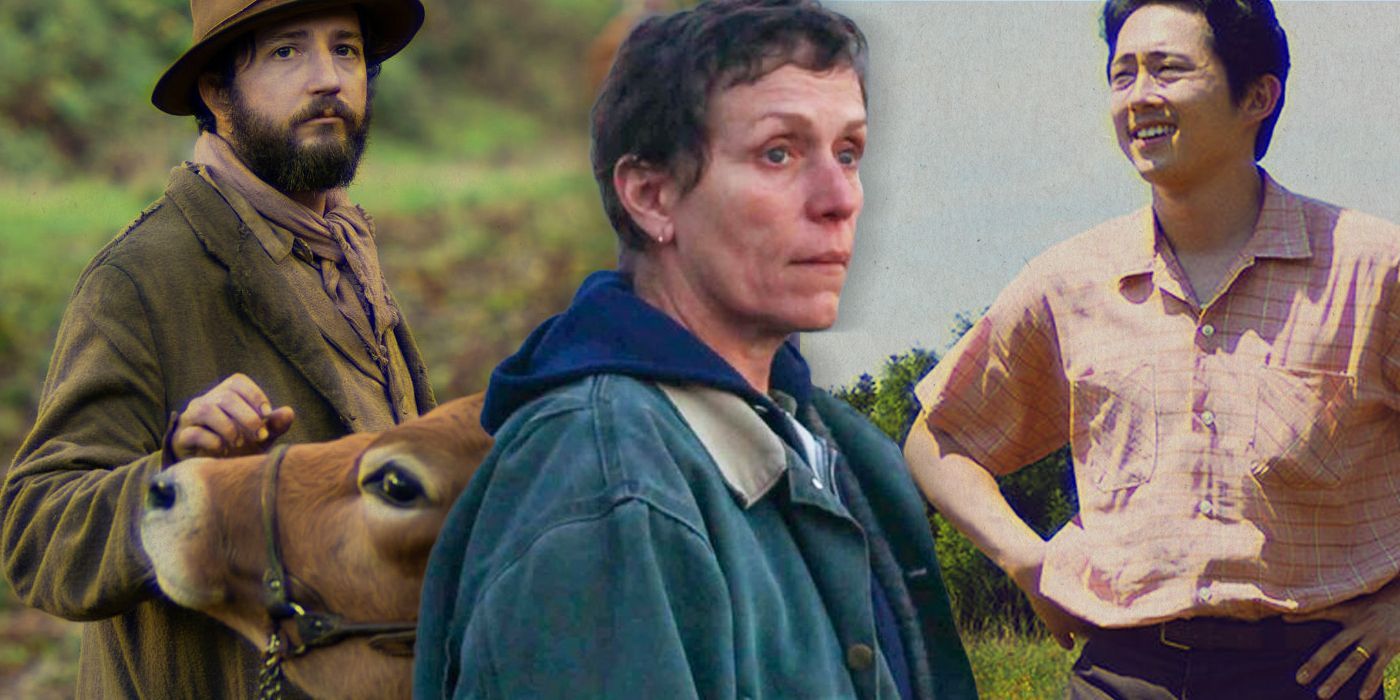
From Citizen Kane to The Social Network, Hollywood has long been fascinated by the American Dream and those who chase after it. Often, these rags to riches stories follow leading men on their upward but ill-fated trajectories. They warn of hubris, but they don’t really speak to the opportunities and obstacles most Americans face. Three highly recommended films from the last year change that. By going small and getting personal, these acclaimed and award-winning movies — which are all available to home audiences — redefine what it means to try to make it in America.
First Cow
The title of Kelly Reichardt’s latest film is as amusing as it is descriptive of the plot. First Cow takes place in 1820 (the same era as Bridgerton, coincidentally) when life in what was then called Oregon Country was so hardscrabble, food itself was a luxury. “Cookie” is making a living scavenging edibles for a party of fur trappers when he runs into Lu, a Chinese fugitive who has built himself a shack in the woods. They become fast friends and decide to bunk up and go into business together. Cookie has a plan to sell fried dough, but they need milk, which isn’t available until the wealthy Englishman who lords over the territory imports a single cow.
Click the button below to start this article in quick view.
Without connections or resources, Cookie and Lu scheme to steal enough milk straight from the source to make their oily cakes. In the largely ungoverned Northwest, theft is risky, and the enterprise becomes even more dangerous as demand for oily cakes grows. First Cow doesn’t fit neatly into any genre, nor does its minimalist allegory of capitalism suggest an easy fix. The movie is at once gentle but unflinching about what it takes to survive — and to want to do more than survive. First Cow is streaming on Showtime and Showtime-compatible apps and is available for purchase on most platforms.
Nomadland
Many Americans dream about traveling the country in an RV; Few expect to actually live in one, doing low wage transient work. But that’s exactly how a growing number of Americans (especially senior citizens) get by, and their stories are the inspiration for Chloé Zhao’s Nomadland, which features a cast of mostly real-life nomads. The film’s fictional main character, Fern, is coping with the loss of her husband, her income and her community after a factory closure forces her onto the road. She finds a new community in the nomads, who offer her strength and support.
The movie’s underlying message is that multinational corporations have gutted small towns and the families who used to call them home, but Nomadland only spends as much time on these issues as it absolutely has to. The focus is on the people. Their circumstances might be unfair and beyond their control, but their persistent and generous spirits endure. Nomadland is streaming on Hulu.
Minari
Lee Isaac Chung’s Minari is perhaps the most down-to-earth movie about the American Dream ever made. Jacob and Monica left Korea for California and California for Arkansas. They have two children, including a son with health issues, and conflicting ideas about what’s best for their family. Both parents work in poultry processing sexing chicks all day but, unfulfilled and unhappy with the low pay, Jacob buys an undeveloped farm at great financial risk. He calculates it’ll still take three years of looking at “chicken butts” plus unpaid farm work before they turn a profit. Monica isn’t really on board, even when Jacob invites her mother to live with them.
What follows is a heartwarming story about vision, hard work and perseverance, without a sugarcoating. Minari is as much about family as it is about entrepreneurship, and it’s brutally honest about the difficulties inherent to work and family life. It’s likely to resonate with immigrants on an extra level, but everyone will relate to Minari’s highly specific moments of success, failure and everything in between. Minari is available as a PVOD rental on most platforms and is playing in select theaters.
About The Author
